Architecting for the Future: A Guide to Post-Quantum AI Infrastructure Security in 2026

TL;DR
- ✓ Protect proprietary model weights against Harvest Now Decrypt Later quantum threats.
- ✓ Replace legacy RSA and ECC encryption with NIST-approved post-quantum cryptographic standards.
- ✓ Secure the Model Context Protocol by implementing granular agent-based access controls.
- ✓ Adopt zero-trust architectures to defend against lateral movement in AI-driven environments.
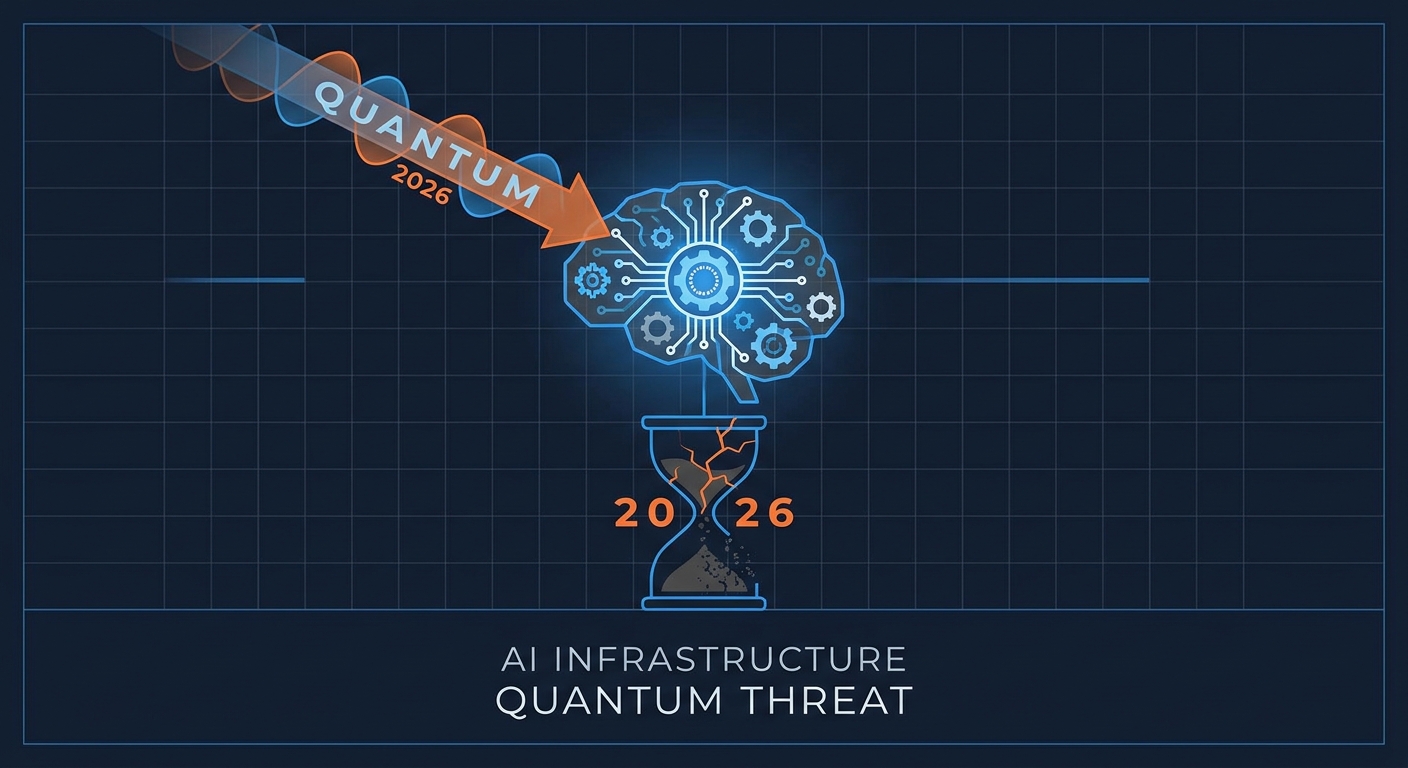
The year 2026 isn’t some abstract, futuristic deadline. It’s here. If you’re running enterprise AI, you’re already standing in the crosshairs of a threat that doesn’t care about your traditional firewalls.
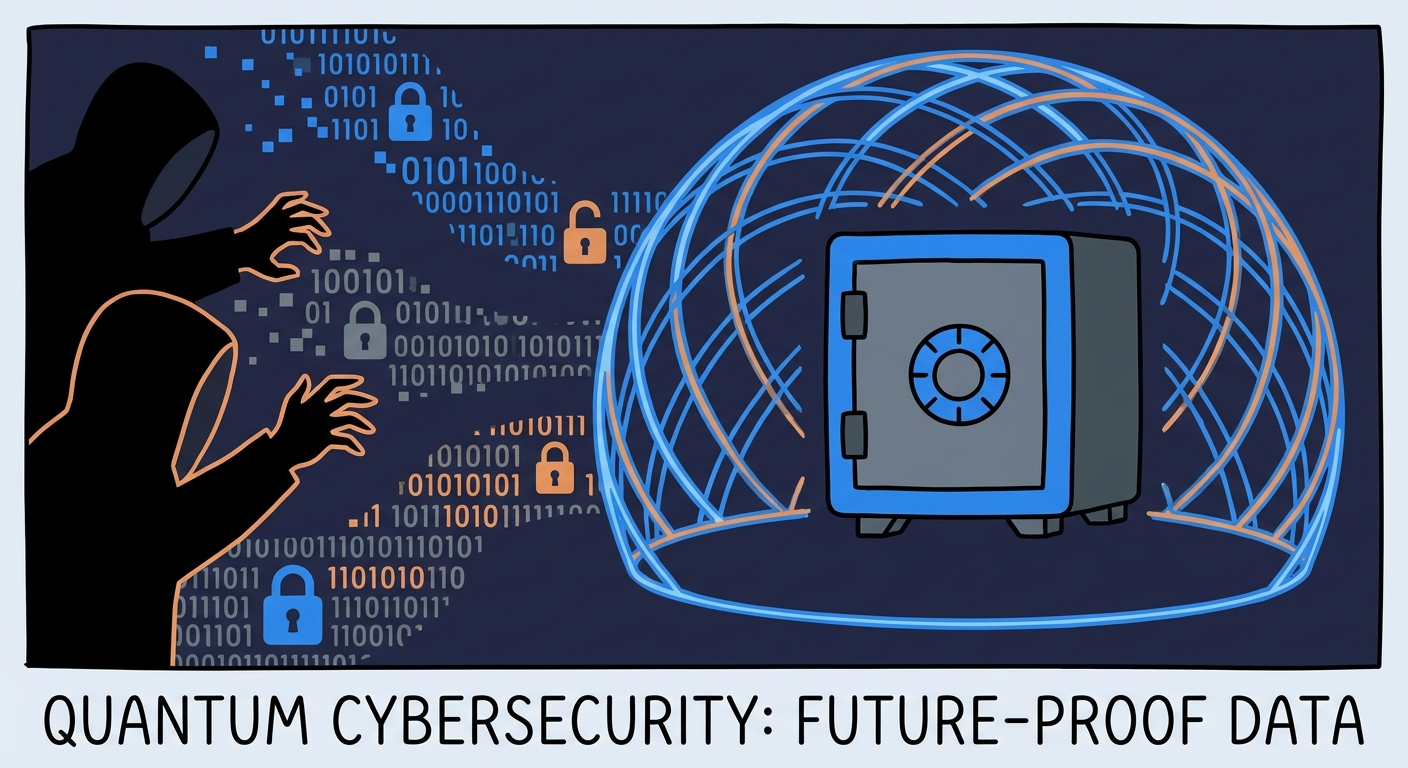
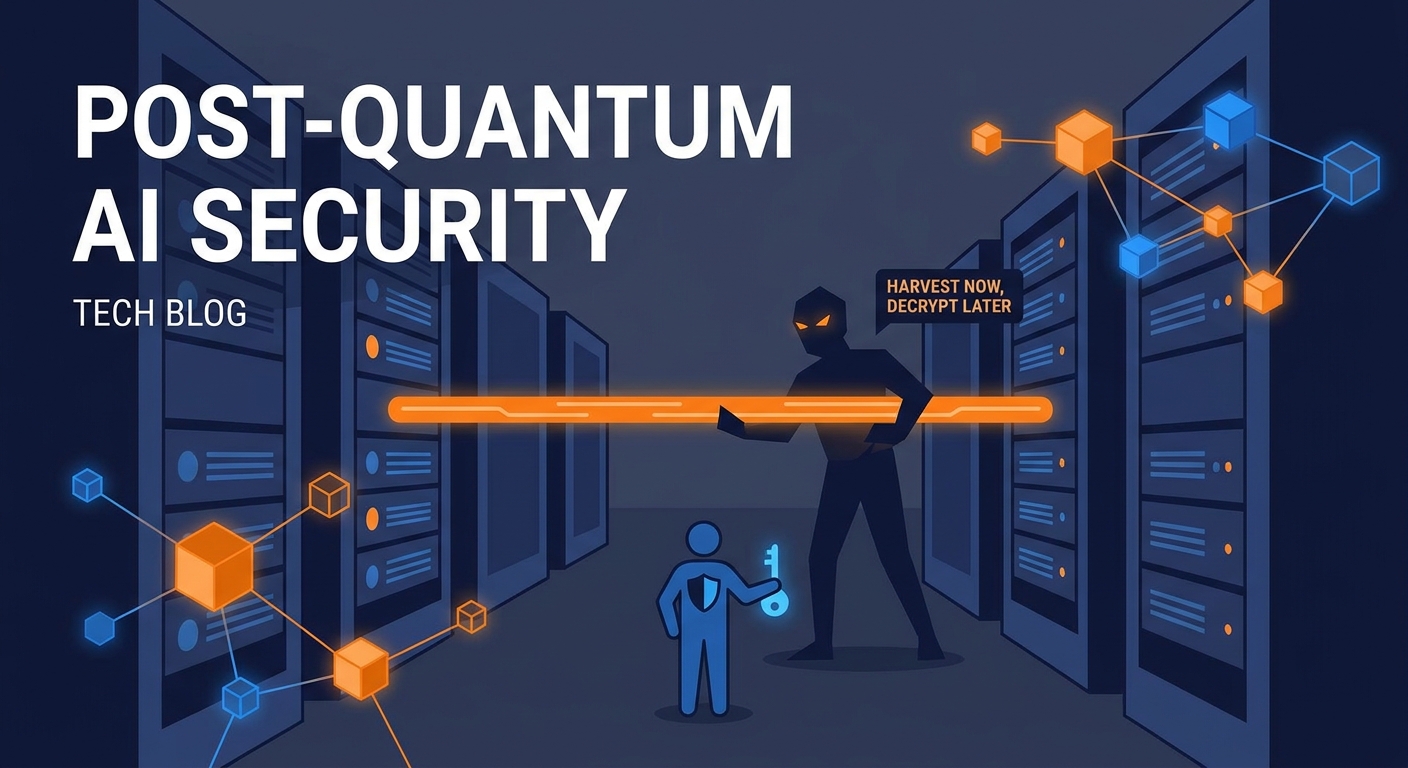
Forget the cinematic, Hollywood-style collapse of global encryption. That’s not how this works. The real danger is silent, patient, and arguably more devastating: the "Harvest Now, Decrypt Later" (HNDL) strategy. State-level actors and industrial spies are currently vacuuming up your encrypted AI model weights, your proprietary training datasets, and your sensitive inference logs. They aren’t trying to break them today. They’re storing them. They’re waiting for the day cryptographically relevant quantum computers (CRQCs) hit the market.
If your architecture is still leaning on classical RSA or ECC encryption, you’re basically building a vault for your competition to loot in a few years. To survive this shift, you have to stop thinking about "perimeter security." You need to start thinking about Cryptographic Agility and Zero-Trust agent authentication.
The Quantum Threat to AI Infrastructure
Why is AI uniquely vulnerable? Because of what’s at stake.
A standard database of customer emails is valuable, sure. But your AI model weights? That’s your secret sauce. That’s your competitive advantage, your R&D investment, and your intellectual property all rolled into a massive matrix of numbers. If an adversary steals your model, they don't just steal data—they steal your entire business model.
Right now, we rely on RSA and ECC. These standards work because they make factoring large integers or solving discrete logarithms an impossible math problem for classical computers. But Shor’s algorithm changes the rules of the game. It turns those "impossible" problems into trivial ones for a quantum machine.
When we talk about the NIST Post-Quantum Cryptography Standards, we aren't just discussing a routine software update. We’re talking about a total rebuild of how we anchor trust. Thanks to the HNDL threat, any sensitive data you transmit today is already compromised if it has a long shelf life. By 2026, the question isn’t if your current encryption will be broken; it’s how fast you can pivot to algorithms that can actually stand up to quantum computation.
Navigating the Model Context Protocol (MCP) Security Gap
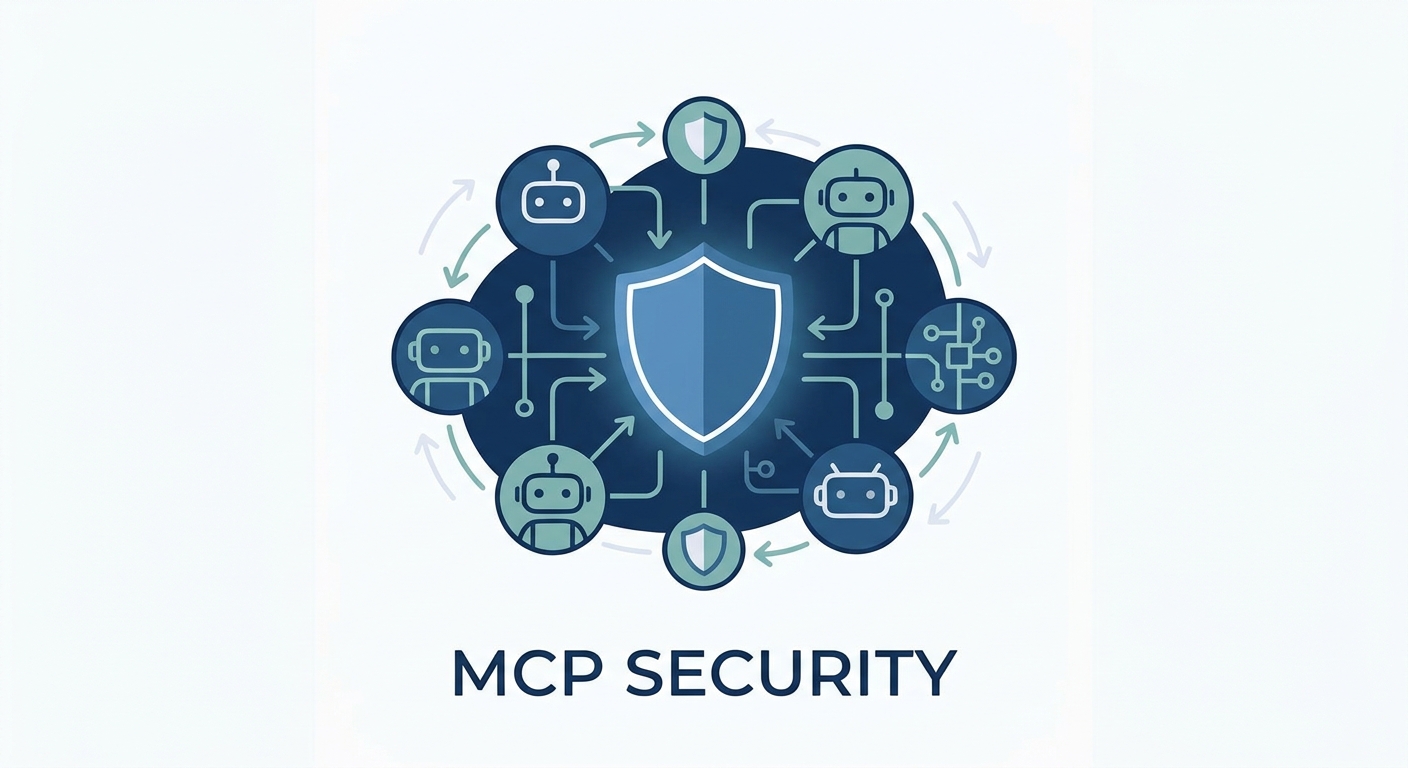
The rise of agentic AI has given us the Model Context Protocol (MCP). It’s a brilliant standard for connecting models to data, but for a security team, it’s a headache.
Old-school firewalls were built for people sitting at computers. They were built for human-to-server traffic. They have no idea how to handle the granular, high-frequency chatter of modern AI agents. When an AI agent taps into a data repository via MCP, it creates a new, ghostly attack surface. If that agent gets hijacked, it can move laterally, scraping training data or poisoning outputs before you even realize something is wrong.
These interactions happen at machine speed. Human-in-the-loop verification? Forget about it. You need a security layer that recognizes the agent, vets its context, and locks down access at the protocol level. Relying on network-level security here is like trying to catch a mosquito with a fishing net.
The Anatomy of a Hybrid-Quantum Security Stack
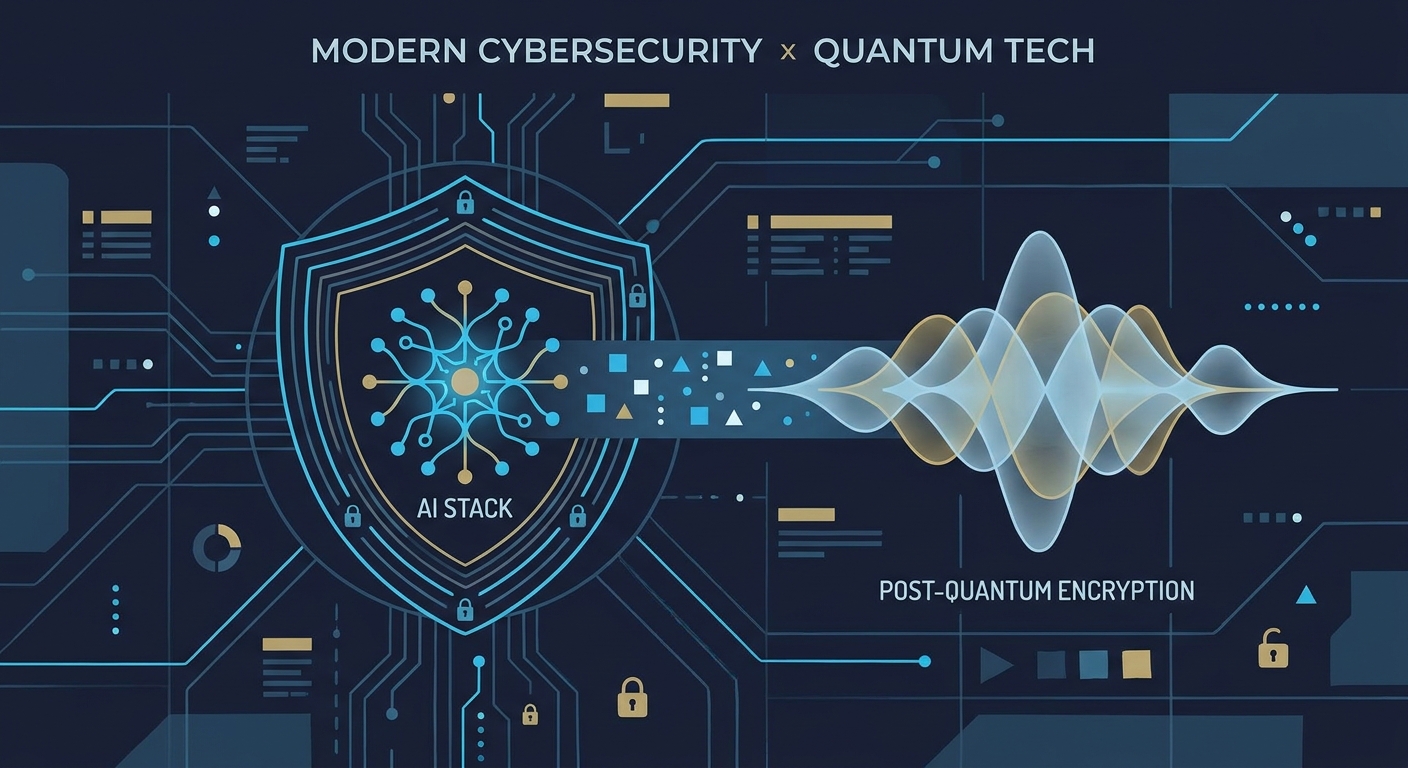
So, how do we bridge the gap? The industry gold standard for 2026 is the Hybrid-Quantum approach. It’s simple in concept, though heavy in implementation: you layer your defenses. You keep your classical algorithms—which are battle-tested and robust—and you wrap them in a PQC (Post-Quantum Cryptography) shield.
This dual-layer strategy is your safety net. If a vulnerability is found in a new PQC algorithm, your classical layer is still there holding the line. More importantly, this architecture must be modular. If you can’t swap out an algorithm without taking the whole system down for a week, you’ve already lost.
Achieving Cryptographic Agility in Your AI Pipeline
Cryptographic Agility is the holy grail. It means you can swap out your encryption methods without rewriting your entire application. If your crypto-libraries are hard-coded into your models, you’re tethered to obsolete math.
You need to decouple your cryptographic modules from your app framework. Build a standardized abstraction layer. When new NIST standards drop, you should be able to update a config file and be done with it. If you’re currently staring at your stack and wondering where the "legacy crypto" is buried, Infrastructure Audit Services can help you find those ticking time bombs before they go off.
Implementing Zero-Trust for AI Agents
Stop trusting tokens. In the world of agentic AI, a stolen token is a golden ticket.
Authentication needs to be context-aware. If an agent asks for a sensitive dataset, your system should be asking: Who is this? What is it trying to do? Why does it need this data? Is it coming from a secure environment?
This is where the AI Governance Framework becomes your best friend. You need to move from static, one-and-done authentication to dynamic, policy-based enforcement. If an agent starts acting weird—like trying to pull data outside of its lane—the system should kill its access instantly. No questions asked.
Case Study: The Prevented Breach
Imagine an unauthorized AI agent posing as a legitimate data-processing service. It’s trying to scrape your proprietary model weights. In a legacy setup, it might just present a stolen API token and walk right in.
But in a quantum-resistant, zero-trust architecture, the system is smarter. It performs a multi-factor check. It sees the agent is reaching for a repository it has no business touching. Because the channel is secured with hybrid-quantum encryption and the identity is verified through context-aware policies—as laid out in CISA’s Post-Quantum Cryptography Guidance—the system shuts the door. The breach is dead on arrival.
The 2026 Implementation Roadmap
This is a marathon, not a sprint. If you try to do it all at once, you’ll break your production environment. Follow this phased approach.
- Phase 1: Inventory & Audit (Q1): Map everything. Where are your model weights? Where do your agents talk? You can’t secure what you can’t see.
- Phase 2: Pilot (Q2): Start small. Use hybrid encryption for internal, low-stakes agent communication. Test for latency and performance hits.
- Phase 3: Scaling (Q3): Move the core data pipelines over to PQC standards. Tighten the zero-trust screws.
- Phase 4: Compliance (Q4): Stress-test the whole thing. Bring in the red team. Ensure you’re hitting the latest NIST benchmarks.
Frequently Asked Questions
How does quantum computing threaten AI models specifically?
Quantum computing threatens AI primarily through the theft of intellectual property. By decrypting the communication channels used to transmit model weights or by breaking the encryption protecting training datasets, adversaries can steal proprietary models, effectively bypassing years of R&D investment.
What is "Cryptographic Agility" and why is it vital for 2026?
Cryptographic Agility is an architectural design principle that decouples the security library from the application code. It is vital in 2026 because the threat landscape is evolving rapidly; agility allows teams to swap out aging or compromised encryption algorithms for newer, quantum-safe alternatives without needing to rebuild their entire infrastructure.
Is Model Context Protocol inherently insecure?
No, the Model Context Protocol is not inherently insecure. It is a powerful, standard-based way to enable agentic workflows. However, because it introduces new connection points between AI models and external data, it requires a robust, zero-trust security layer to prevent unauthorized access and data leakage.
Should we wait for quantum-proof hardware before upgrading?
Waiting for quantum-proof hardware is a high-risk strategy that invites the HNDL threat. The most effective defense in 2026 is software-level implementation of post-quantum algorithms. You should prioritize securing your data in transit and at rest using current PQC software standards immediately.
What are the primary NIST standards I should be implementing today?
You should focus on implementing the NIST FIPS 203 (Module-Lattice-Based Key-Encapsulation Mechanism), FIPS 204 (Module-Lattice-Based Digital Signature Standard), and FIPS 205 (Stateless Hash-Based Digital Signature Standard). These form the bedrock of the current post-quantum security transition.